
From Hollywood Yacht to Lithium Power: The Thea Foss Transformation
Project Gallery
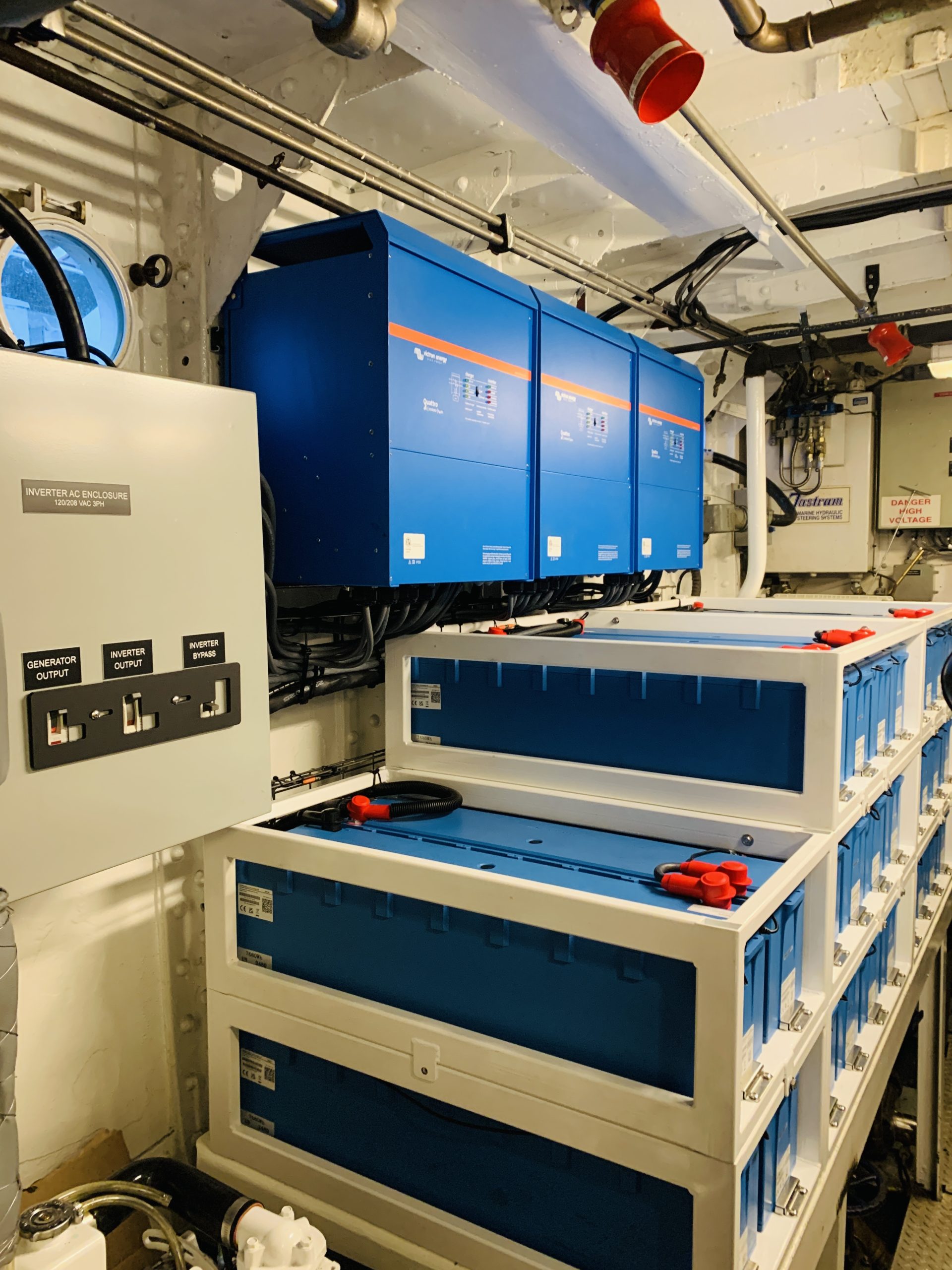
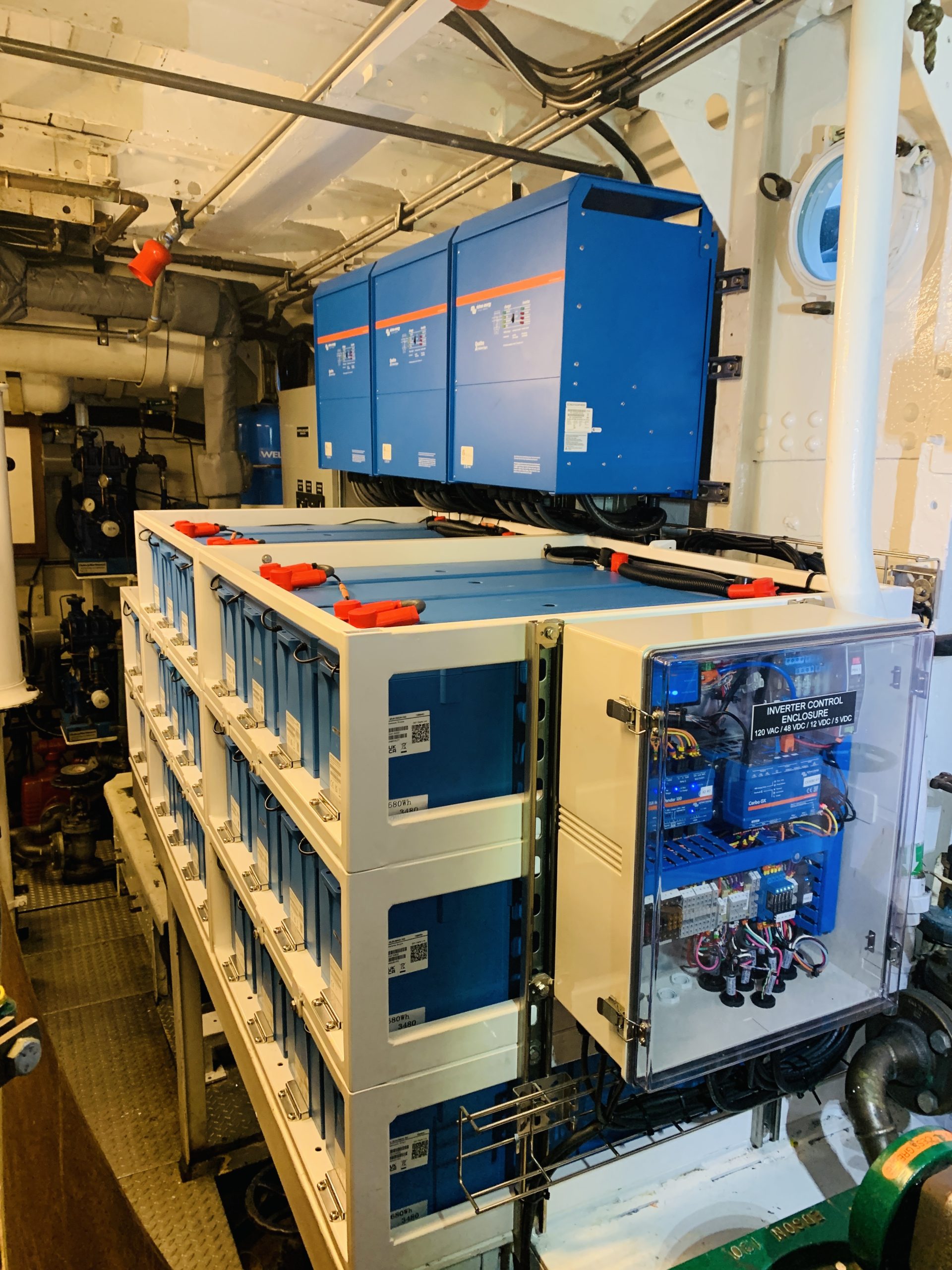
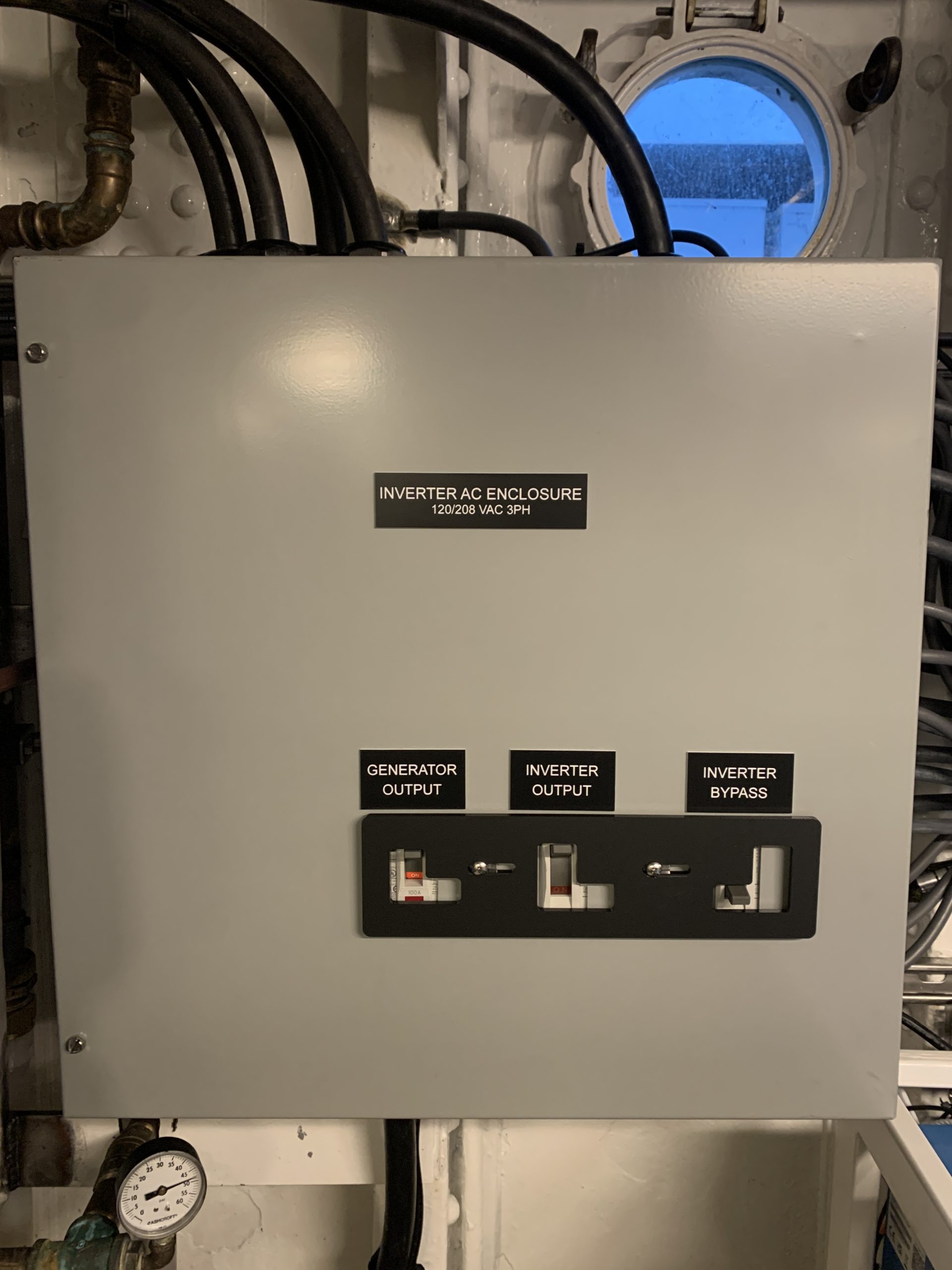
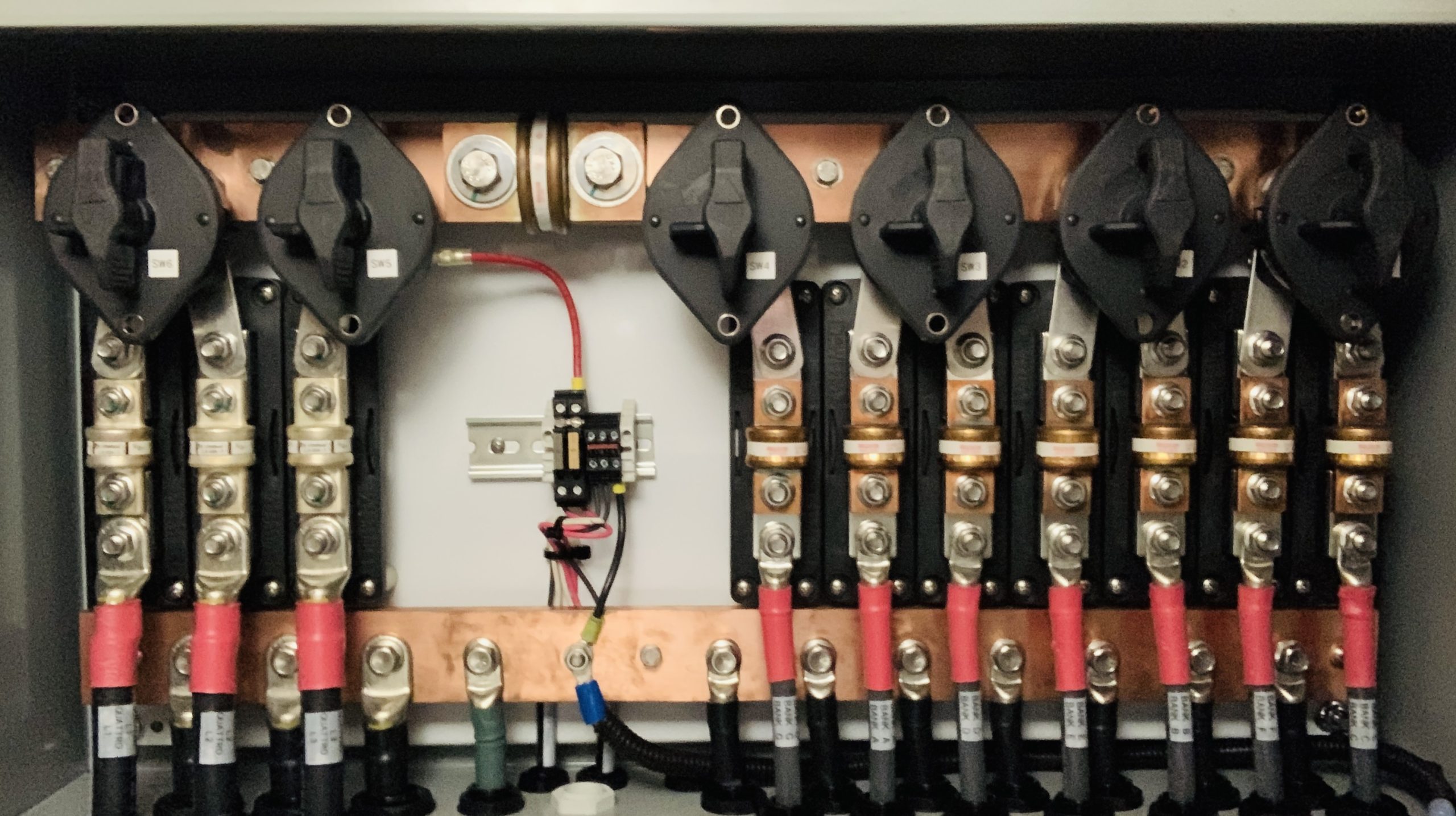
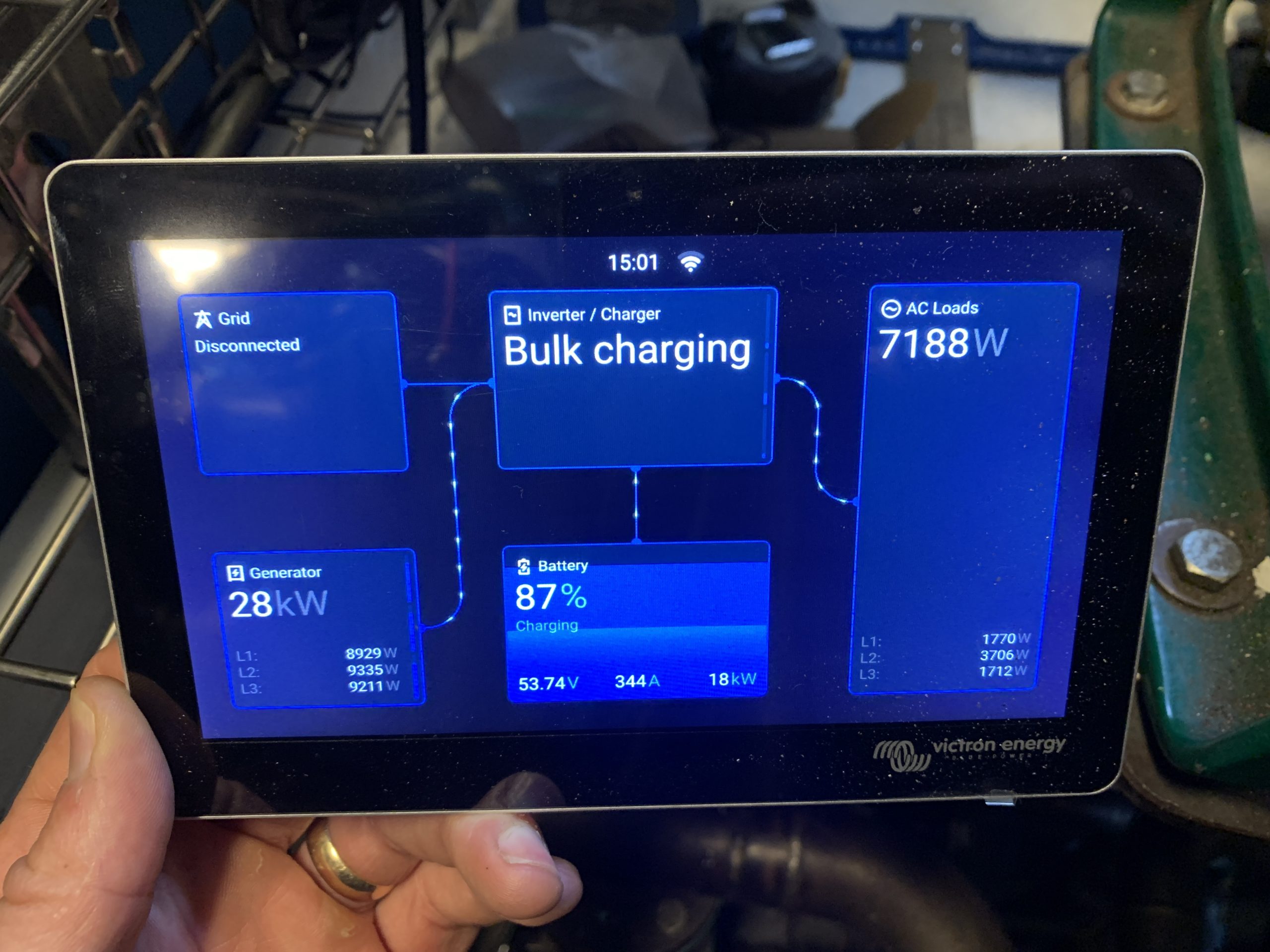
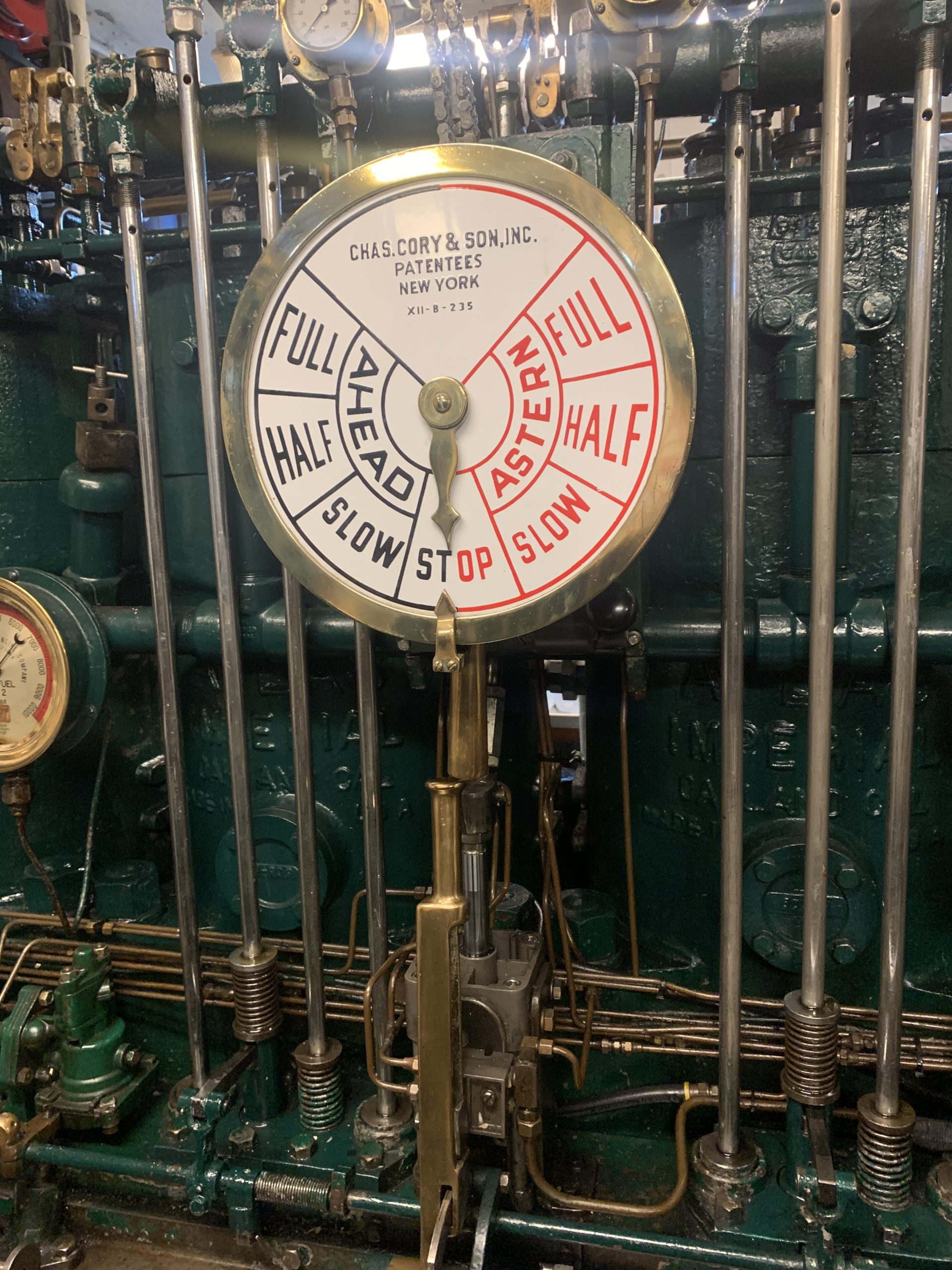
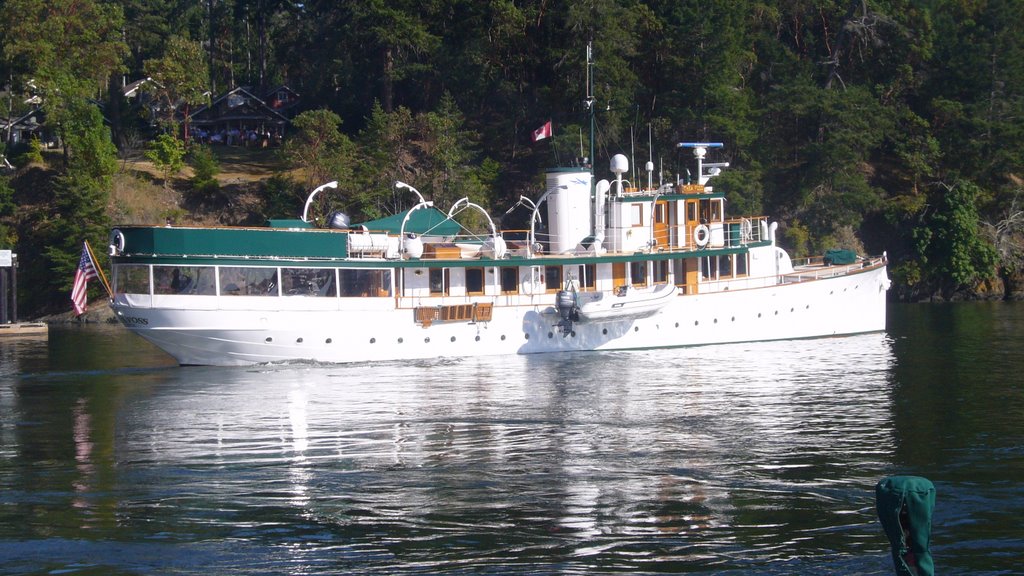
In 1930, a Hollywood leading man commissioned a 120-foot motor yacht from the Craig Shipbuilding Company as a gift for his wife. Nearly a century, several owners, and one U.S. Navy tour of duty later, that same steel-hulled vessel found her way to Puget Sound and became the Thea Foss — named for the founding matriarch of Foss Maritime and, over the decades since, a genuine Pacific Northwest icon in her own right. She’s carried Foss family history, hosted a king of Norway, and become a familiar, beloved sight on the water from Tacoma to the San Juans. That kind of longevity is exactly why this project mattered: the Thea Foss just received the most significant electrical upgrade of her long life, a full three-phase Victron lithium power system built to run a working yacht like a small power plant.
At the center of the project is a three-phase Victron Quattro inverter/charger array — three 48V/10,000VA units, one per phase — delivering 24kW of continuous output and up to 60kW of surge capacity across the array, for a combined charging capacity of roughly 21.5kW (the equivalent of about 1,790 amp-hours per hour at 12 volts) into the battery bank. Backing the array is a purpose-built lithium bank of 28 Victron Lithium NG batteries (25.6V/300Ah each), for roughly 215kWh of usable capacity. To put that in more familiar terms: it’s the energy equivalent of a 12-volt house bank rated at around 17,900 amp-hours — enough to run the boat’s full electrical load independent of shore power or a generator for extended stretches.
A battery bank of that scale doesn’t sit on a shelf. Hullux designed a custom steel battery rack for the installation, built in modules by Ballard Marine Fabricators so it could actually be maneuvered into the engine compartment piece by piece rather than needing to fit through the door as one unit. The finished rack was powder coated white — partly for a clean, finished look in a space that’s meant to look as good as it works, and partly because a proper coating stands up to years of engine-room conditions far better than bare or painted steel.
The inverter array was paired with a generator replacement — a new 28kW three-phase genset, right-sized to cover the boat’s everyday loads rather than her absolute peak demand, which is the more expensive, less efficient way most boats are built. The generator runs continuously to carry typical hotel and house loads. When demand spikes — galley equipment, water heaters, and guest loads all landing at once — PowerAssist kicks in automatically: the Quattro array draws on the battery bank to supplement the generator’s output in real time, adding up to another 60kW of surge capacity on top of what the generator is already producing, for a combined peak capability of roughly 88kW. The generator never has to be oversized to chase momentary peaks, and it never has to work harder than its steady, efficient running range — the batteries absorb the spikes instead. The net effect is a smaller, quieter, more fuel-efficient primary generator, with 215kWh of lithium standing by to cover whatever it can’t.
Two of the boat’s biggest loads — a 24kW guest water heater and a 36kW galley water heater — got their own layer of intelligence. Both now run through automation built in Victron’s Node-RED environment, with temperature sensors on each tank feeding data back to the control system. Rather than simply cutting power whenever the inverter array gets loaded, the system load-sheds intelligently, disconnecting and reconnecting each heater based on electrical headroom and actual tank temperature — so there’s hot water for a commercial dishwasher running hard in the evening and for guests wanting a hot shower first thing in the morning, without ever asking the inverter array to do more than it should. The whole system also senses which power source is active — shore power, the new generator, or inverter-only — through a direct connection to the vessel’s main switchboard, automatically running the correct control program for whatever mode it’s in.
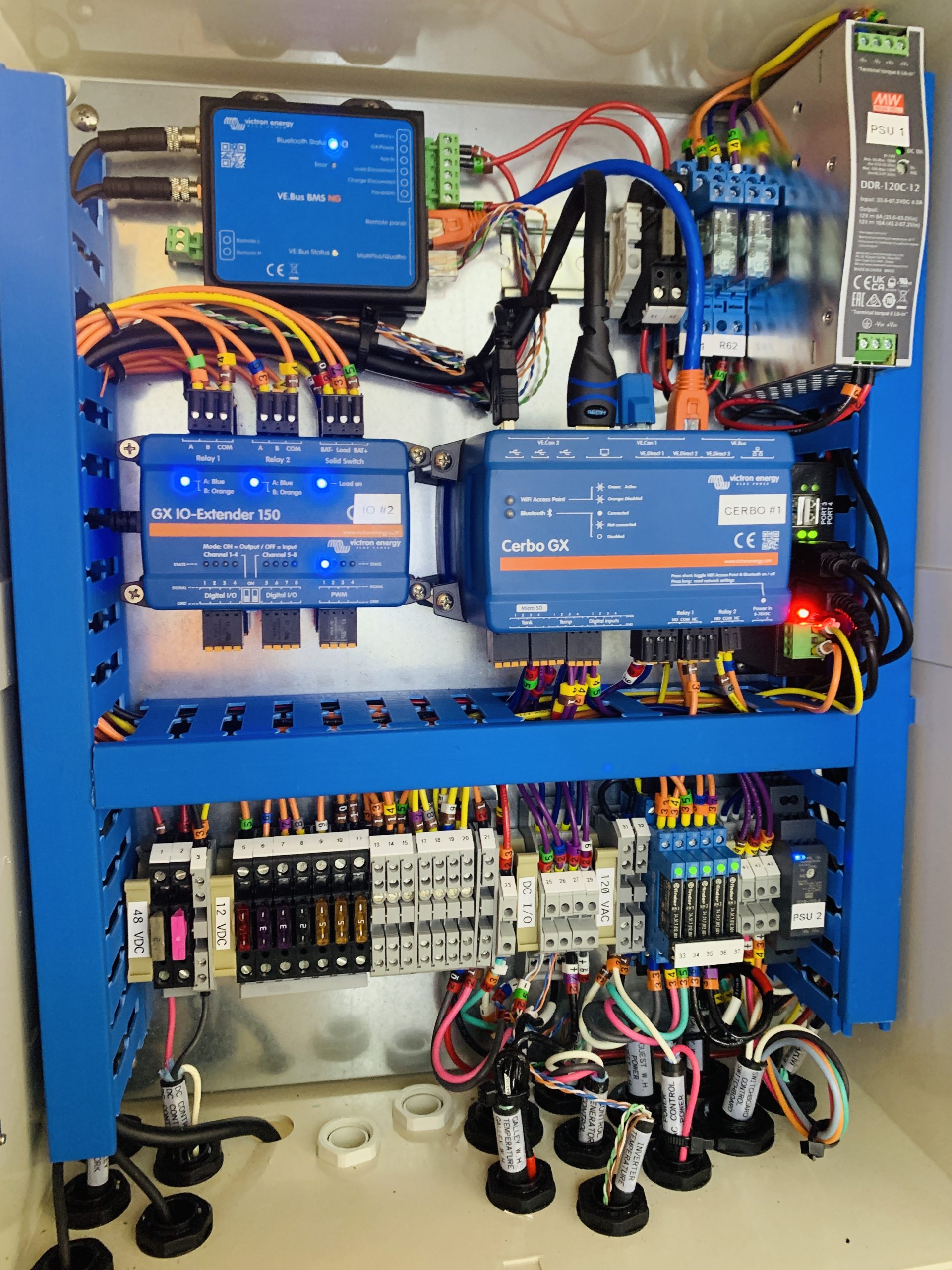
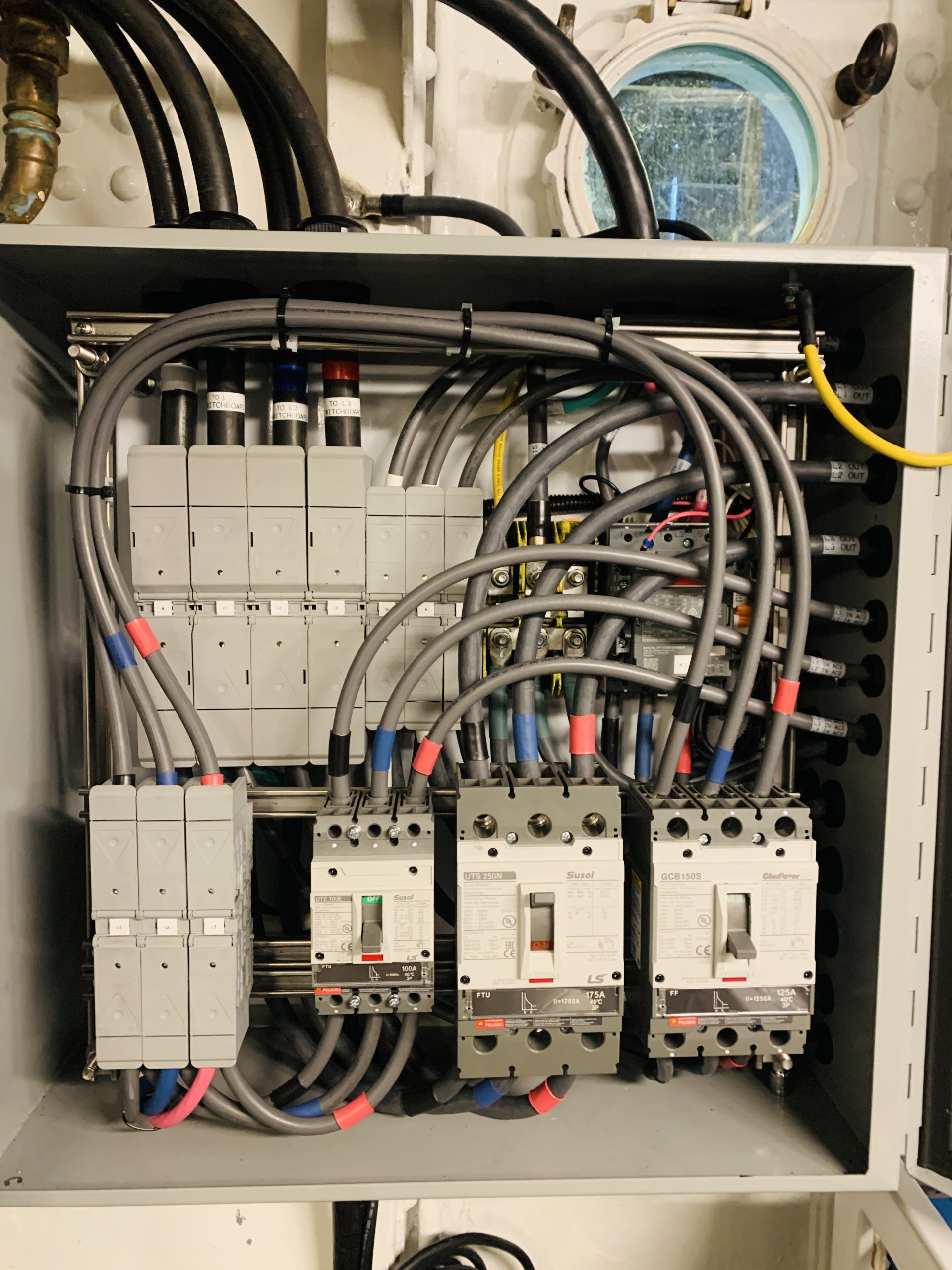
Monitoring and control run through a Victron Cerbo GX with a GX Touch 70 display, backed by a second, fully programmed Cerbo GX standing by in reserve — not a redundancy most boats need, but appropriate for a vessel that can’t afford downtime. A VE.Bus BMS controller and a GX IO-Extender 150 round out the control architecture, and current transformers on each AC phase feed a dedicated ammeter so the crew can watch the three-phase system balance load in real time. A Quattro bypass circuit was also built in, so the vessel’s backup generator can power the boat directly if the inverter array ever needs to come offline for service.
None of it was easy to install. The Thea Foss is steel from the keel up, which means every mounting point, cable run, and grounding connection had to be planned around structural steel rather than the more forgiving fiberglass most modern boats are built from — steel work is unavoidably slower, and every hole and weld matters. And despite her generous length, the mechanical space allotted to a battery bank and inverter array of this scale left almost no room to spare — clearances were routinely down to the inch, and in more than one spot, down to a quarter of an inch. Fitting a three-phase inverter array, a modular battery rack, and two enclosures into that space meant measuring, drafting, and 3D modeling the entire installation before a single component went in — and then measuring it all over again once the real dimensions of delivered hardware were in hand.
The finished system gives a nearly century-old Pacific Northwest icon — one that started life under a movie star’s name and now carries the legacy of one of the region’s founding maritime families — the electrical backbone of a modern commercial vessel: three-phase power, a 215kWh (roughly 17,900Ah at 12 volts) lithium reserve, smart automation that balances hot water against available power in real time, and a generator that only has to work as hard as it needs to.